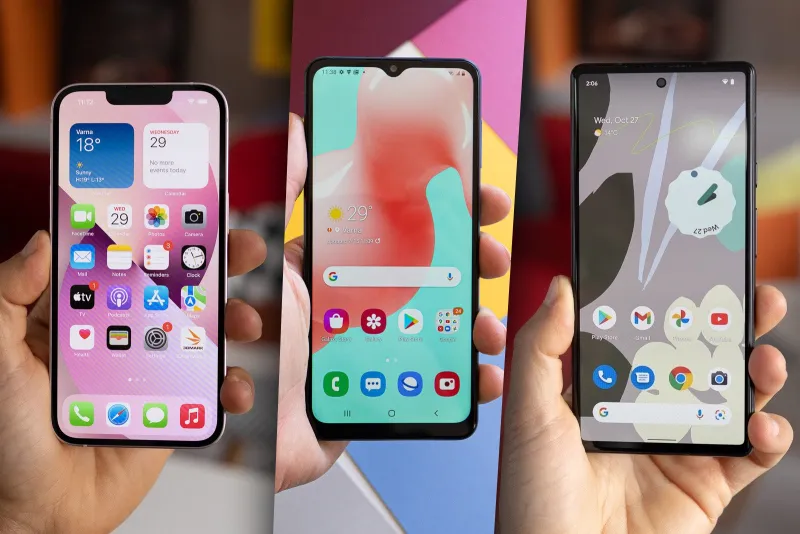
Same Coin, Different Price: The Hidden World of Crypto Rate Gaps Between Mobile Apps

Photo: Taken from w:en:Cancer of unknown primary; mostly showing w:en:Template:Medicine., CC BY-SA 4.0, via Wikimedia Commons
You're sitting at lunch, checking your portfolio on S8B Crypto, when your friend across the table looks up from their phone and says, "Wait, why does my app show Bitcoin at a different price than yours?"
You both laugh it off. Probably just a refresh thing, right?
Not exactly. What you just stumbled onto is one of the most misunderstood dynamics in crypto trading — and depending on how you handle it, it can either quietly drain your returns or give you a legitimate edge. Let's break it down.
Where Crypto Prices Actually Come From
Here's the thing most beginner guides skip: there's no single, official Bitcoin price. Unlike a stock on the NYSE, which has a centralized exchange setting the price at any given moment, crypto trades across dozens of independent exchanges simultaneously — Coinbase, Binance, Kraken, Bybit, OKX, and hundreds of smaller venues.
Every one of those exchanges has its own order book, its own buyers and sellers, and its own real-time price. The "price" you see on any app is really just that platform's best interpretation of what the market is doing right now, based on wherever they're pulling their data.
Some apps build their own aggregated price feeds by averaging data across multiple exchanges. Others pull directly from a single exchange — often the one they're partnered with or built on top of. A few use third-party data providers like CoinGecko, CoinMarketCap, or Chainlink's oracle network. The result? Legitimately different numbers on legitimately different screens, all at the same moment.
How Big Are These Gaps, Really?
For major coins like Bitcoin and Ethereum, the spread between platforms is usually small — we're talking fractions of a dollar to maybe a few bucks on a coin worth tens of thousands. That might sound negligible, but when you're moving $10,000 worth of BTC, even a 0.1% price discrepancy translates to $10 in real money. Scale that up, and it matters.
For smaller altcoins and low-cap tokens, the gaps get much wider. A token that only trades actively on two or three exchanges can show dramatically different prices depending on which venue your app is connected to. Spreads of 1–3% aren't uncommon during volatile sessions, and during a breaking news event or a sudden liquidity crunch, you might see even larger divergences.
This is the foundation of what traders call arbitrage — buying an asset on one platform where it's cheaper and selling it on another where it's priced higher, pocketing the difference.
Can You Actually Arbitrage From Your Phone?
Short answer: yes, but it's harder than it sounds.
Classic arbitrage requires speed, low fees, and the ability to move funds between exchanges almost instantly. Professional arbitrageurs run automated bots that execute trades in milliseconds. By the time you manually spot a price gap, open two apps, and place two trades, the opportunity has usually evaporated.
That said, mobile traders aren't completely locked out. Here's where you can realistically find an edge:
Withdrawal and deposit windows. If you already hold funds on two exchanges, you can act on price gaps without needing to move money between platforms. Keep a small balance on a secondary exchange specifically for moments when your primary app shows a noticeably different price.
Stable coin pairs vs. USD pairs. Sometimes the gap isn't between two crypto exchanges — it's between a crypto-to-stablecoin pair (like BTC/USDT) and a crypto-to-fiat pair (like BTC/USD). The implied exchange rate between USDT and USD creates a subtle arbitrage layer that casual traders almost never notice.
DEX vs. CEX pricing. Decentralized exchanges like Uniswap or PancakeSwap price assets based on their automated market maker (AMM) pools, which update differently than centralized order books. During fast-moving markets, DEX prices can lag behind CEX prices by a meaningful margin. Some mobile wallets give you direct DEX access — if yours does, pay attention to this gap.
Which Apps Pull From Where?
This varies and changes over time, but here's a general lay of the land for US users:
- Coinbase pulls prices from its own order book. When you're trading on Coinbase, you're seeing Coinbase's market, not a blended global average.
- Kraken similarly uses its own internal exchange data.
- Binance.US operates independently from the global Binance exchange, which is why prices can occasionally differ from what international users see.
- Robinhood Crypto aggregates prices from multiple liquidity providers but executes trades through its own internal routing, which can introduce additional spread.
- General portfolio tracker apps (like Delta or Blockfolio) typically pull from CoinGecko or CoinMarketCap APIs, giving you a blended market price rather than any single exchange's quote.
The practical takeaway: if you're making a trading decision, always check the execution price inside the app you're actually trading on — not the price showing in a tracker or news feed.
The Trap Side of Price Gaps
For every trader who profits from arbitrage, there's someone who gets burned by these same gaps without realizing it.
The most common scenario: you see Bitcoin at $67,200 on your portfolio tracker, decide to sell, open your exchange app, and execute the trade — only to realize afterward that your exchange priced it at $67,050. You didn't make a mistake, exactly, but you also didn't account for the fact that you were trading against a different price feed than the one you made your decision on.
This is especially sneaky on mobile because you're often bouncing between apps quickly. You check price on one screen, act on another, and the mental math you did is already slightly wrong before you even hit confirm.
The fix is simple: always verify the price inside the trading interface before confirming any order. Don't rely on a number you saw five seconds ago somewhere else.
Making Your Mobile Setup Work Smarter
If you want to trade more intelligently across multiple platforms, here are a few practical habits worth building:
-
Pick a reference price source and stick with it. Choose one aggregator (CoinGecko is reliable for US users) as your mental baseline for "what is this coin worth right now." Compare your exchange's execution price against that baseline before trading.
-
Know your app's data source. Spend five minutes digging into your trading app's FAQ or help docs to understand where their prices come from. It's boring, but it's useful.
-
Watch the spread, not just the price. The bid-ask spread on your exchange tells you more about your actual trading cost than the headline price does. A coin "priced" at $100 with a $0.50 spread means you're really buying at $100.25 and selling at $99.75.
-
Use limit orders. Market orders on mobile are fast and satisfying, but they execute at whatever price the exchange decides at that exact moment. Limit orders let you define the price you're willing to accept, which removes a lot of the uncertainty that comes from data feed gaps.
The Bottom Line
Price differences between your app and your friend's aren't random noise — they're a real feature of how fragmented the crypto market is. Understanding where those gaps come from, which apps pull from which sources, and how to protect yourself from accidentally trading against stale or mismatched data is the kind of knowledge that separates casual users from traders who actually know what they're doing.
Your phone is powerful enough to manage a serious crypto portfolio. But it's only as good as the data feeding it — and now you know how to read between the lines.