The Commute Trade: Why Your Phone Turns Into a Gambling Machine Between 9 and 5

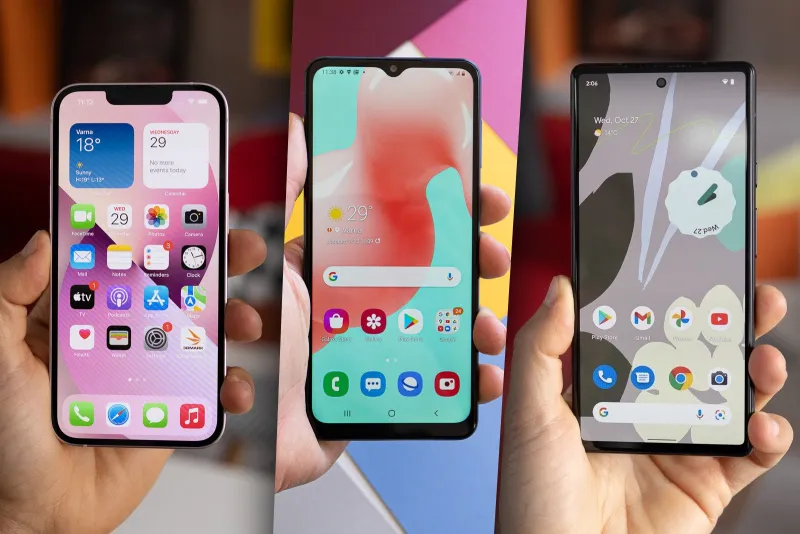
Photo: stressed person trading on smartphone during commute subway, via imgv2-2-f.scribdassets.com
It starts innocently enough. You're on the subway, coffee in hand, killing time before your stop. You open your crypto app — just to check. ETH is down 6%. Your portfolio is red. Your stomach tightens.
Fifteen minutes later, you've made three trades you didn't plan, spent $40 in fees, and you're not even at the office yet.
Welcome to pocket trading — one of the most psychologically dangerous habits in modern retail crypto investing.
Why Work Hours Are a Behavioral Finance Trap
Between 9 AM and 5 PM, most Americans are simultaneously at their least emotionally regulated and their most connected to their phones. Work stress, Slack notifications, bad meetings, traffic, deadlines — all of it creates a low-grade anxiety that doesn't just sit quietly in the background. It leaks.
And when it leaks, it looks for an outlet.
For crypto traders with a mobile app one swipe away, that outlet is often the market. A bad morning at work becomes a trigger to "make something happen" financially. A missed alert on a coin you've been watching becomes a reason to chase the price right now, from the parking lot, on a 4G connection, with 45 seconds before your next meeting.
This isn't a discipline failure. It's behavioral finance doing exactly what it's designed to do — which is to say, it's your brain misfiring in predictable ways under predictable conditions.
The Psychology of Revenge Trading
Revenge trading is what happens when a loss — or even just the feeling of being left behind — triggers an urgent need to recover ground immediately. It's the crypto equivalent of doubling down at the blackjack table because you're frustrated, not because the odds changed.
On a desktop, revenge trading is still a risk. But on mobile, the friction is almost nonexistent. There's no waiting for a computer to boot up, no sitting down at a dedicated workspace that signals "I am making a financial decision." Your phone is already in your hand. The app is already installed. The trade is three taps away.
That frictionlessness is genuinely valuable when you're executing a planned strategy. It's genuinely dangerous when you're emotionally reactive.
Consider a pattern that comes up again and again in retail trading communities: a trader watches a token drop 8% while they're stuck in a work meeting, unable to act. By the time they're free, it's recovered 4%. Rather than accepting the non-event, they buy in at the recovery price — emotionally "chasing" a loss they never actually took — only to watch it fall another 5% by end of day.
The original meeting wasn't the problem. The phone in their pocket during the meeting was.
The Commute Window Is Especially Dangerous
Morning and evening commutes are uniquely high-risk windows for impulsive trading. Here's why:
Cognitive load is high. You're navigating traffic, managing public transit, mentally previewing your day or decompressing from it. Your prefrontal cortex — the part of your brain responsible for long-term thinking and impulse control — is already stretched.
You're in transition. Commutes are liminal spaces. You're not fully "at work" and not fully "at home." That psychological in-between state reduces the sense of accountability that anchors better decisions.
Market opens coincide with morning commutes. The US stock market opens at 9:30 AM Eastern. Crypto never closes, but volatility often clusters around traditional market hours. The most emotionally charged price moves frequently happen right when you're on the train, in the car, or grabbing coffee — exactly when your attention is fragmented and your patience is thin.
Building a Personal Trading Framework That Actually Works
The answer isn't to delete your apps or swear off mobile trading. The answer is to build rules that account for the version of yourself that trades from the parking lot at 8:47 AM — not just the calm, clear-headed version that reads charts on a Sunday afternoon.
Rule 1: Define your trading windows in advance. Pick one or two times per day when you're allowed to make new trades — and stick to them. Many traders find that late evenings (after 8 PM) and weekend mornings work best. These windows have lower emotional charge and higher cognitive bandwidth.
Rule 2: Use limit orders, not market orders, on mobile. A limit order forces you to name a specific price before you execute. That small friction is often enough to interrupt an impulsive decision. If you can't articulate exactly why you're buying at this price right now, a limit order will make that obvious.
Rule 3: Implement a 10-minute rule. Before executing any unplanned trade from your phone, set a 10-minute timer. Close the app. Do something else. If the trade still makes logical sense when the timer goes off, execute it. Most of the time, it won't.
Rule 4: Separate your "watch" behavior from your "trade" behavior. Checking prices is fine. Checking prices should not automatically lead to trading. Try keeping your portfolio tracker and your trading app as two separate apps — the extra step of switching creates just enough friction to break the impulse loop.
Rule 5: Log your emotional state before every trade. It sounds tedious, but a simple voice memo or note — "entering this trade, feeling frustrated after a rough morning" — creates accountability. Over time, you'll start to see patterns in when your worst trades happen.
Your Pocket Is Powerful — Use It Intentionally
At S8B Crypto, we genuinely believe that mobile access to blockchain markets is one of the most democratizing forces in personal finance today. The ability to manage your crypto portfolio from anywhere, at any time, is a real advantage.
But that same accessibility is a double-edged sword. The market doesn't care that you're stressed, late for a meeting, or emotionally reacting to a red portfolio. It will just take your money.
The traders who win long-term on mobile platforms aren't the ones who trade the most. They're the ones who've learned to recognize when their phone is a tool — and when it's a trap.
Knowing the difference might be worth more than any indicator you'll ever find.