Fast Fingers, Slow Returns: The Surprising Truth About Mobile Crypto Traders
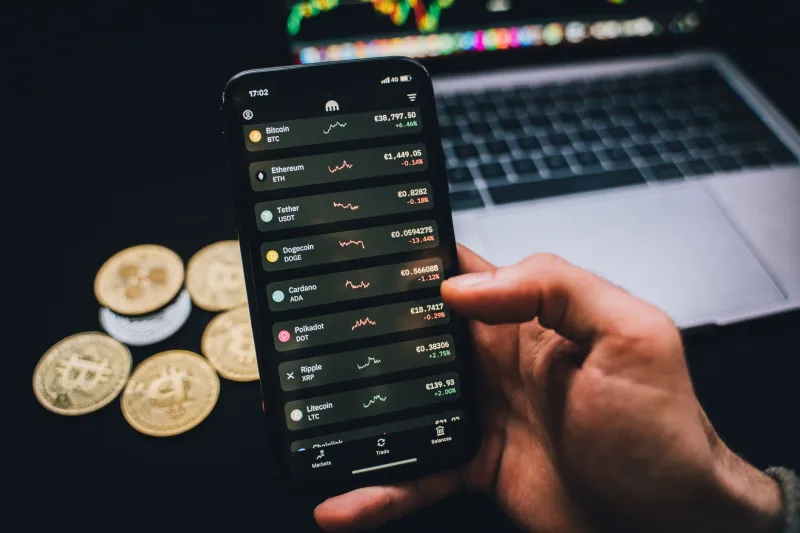
There's a version of the mobile crypto trader story that sounds almost heroic. You're at a barbecue in July, your phone buzzes, Bitcoin just dipped 8% in twenty minutes, and you buy the dip before your desktop-bound friends even open their laptops. Two days later, you're up. You look like a genius.
That story is real. It happens. But it's not the whole picture — and at S8B Crypto, we think you deserve the full version.
The Case For Mobile-First Trading (It's Stronger Than Critics Admit)
Let's start with what mobile traders actually get right, because the dismissive "phone trading is gambling" take is lazy and wrong.
Speed matters in crypto. Unlike stock markets with defined trading hours, crypto runs 24/7. A price move at 2 AM doesn't care that you're asleep. Mobile traders with well-configured alerts and the discipline to act on them have a genuine edge over people who check their portfolio once a day on a desktop browser.
Accessibility lowers the barrier to consistency. One of the most underrated advantages of mobile-first trading is that it makes checking in frictionless. You don't need to sit down, open a browser, log in, and navigate a dashboard. You pull out your phone, glance at your portfolio, and make a call. That low-friction access means mobile traders tend to stay more engaged with their positions — which sounds like a problem until you realize that disengaged investors miss rebalancing opportunities constantly.
Real-time notifications create accountability. When your app pings you because Ethereum crossed a threshold you set last week, that's not distraction — that's your strategy working. Mobile-native traders who use threshold-based alerts (rather than just checking prices out of anxiety) report feeling more in control of their portfolios, not less.
Some of the most consistent retail crypto traders in the US are fully mobile-native. They've never used a desktop trading terminal. They built their strategies around their phones — and it works.
Where the Data Gets Uncomfortable
Here's where we have to be honest with you.
Studies on retail trading behavior — in both crypto and traditional equities — consistently show that higher trading frequency correlates with lower net returns. Not because mobile traders are dumb. Because any trader who trades more often faces more transaction costs, more tax events, and more opportunities to let emotion drive a decision.
Mobile trading removes friction. That's its superpower. But friction isn't always the enemy. Sometimes friction is the thing standing between you and a panic sell at the bottom of a dip.
When your phone is in your hand and the market is moving and your portfolio is down 15% in an hour, the psychological pressure to do something is enormous. Desktop traders face this too — but they have to walk to a computer, sit down, and open a browser first. That sixty-second delay has saved more portfolios than any stop-loss order.
The Real Underperformance Culprit: Emotional Velocity
The problem isn't mobile trading. The problem is what researchers call emotional velocity — the speed at which a feeling translates into an action.
On mobile, that velocity is almost instantaneous. You feel fear, you open the app, you sell. The whole sequence takes fifteen seconds. On desktop, there are more steps, more moments to pause, more chances for your rational brain to catch up with your emotional brain.
This is where mobile traders underperform — not in their best moments, but in their worst. The barbecue buy-the-dip story is real. So is the 3 AM panic sell that locks in a loss right before a recovery.
How Successful Mobile-Native Traders Close the Gap
The traders who consistently do well on mobile have figured out a few things that separate them from the crowd.
They pre-decide everything possible. Before a volatile news cycle, before a Fed announcement, before earnings season in tech stocks that tend to drag Bitcoin around — they decide in advance what they'll do at various price levels. Then they set alerts for those levels. When the alert fires, they're not making a decision under pressure. They're executing a plan they made when they were calm.
They treat their phone as an execution tool, not a research terminal. Deep analysis — reading whitepapers, studying on-chain data, comparing exchange fee structures — happens on a bigger screen with more time. The phone is for acting on conclusions they've already reached, not for reaching new ones in real time.
They build in artificial friction. Some mobile traders add a rule: any trade over a certain dollar amount requires a ten-minute wait after the decision. They set a timer. They go do something else. If they still want to make the trade when the timer goes off, they do it. It sounds simple. It works.
The S8B Take
Mobile trading isn't inherently reckless. It's a tool — and like any tool, the results depend on how you use it. Your blockchain portfolio in your pocket is a genuine advantage when you've built a system around it. It becomes a liability when you let the phone's always-on nature turn into always-trading.
The traders who outperform on mobile aren't the ones who react fastest. They're the ones who've done the work to make sure their fastest reactions are also their smartest ones.
Set your strategy on a Sunday afternoon. Configure your alerts deliberately. Then let the phone do what it's good at — keeping you connected to your portfolio without letting your portfolio run your life.